DAVIS Does it Differently
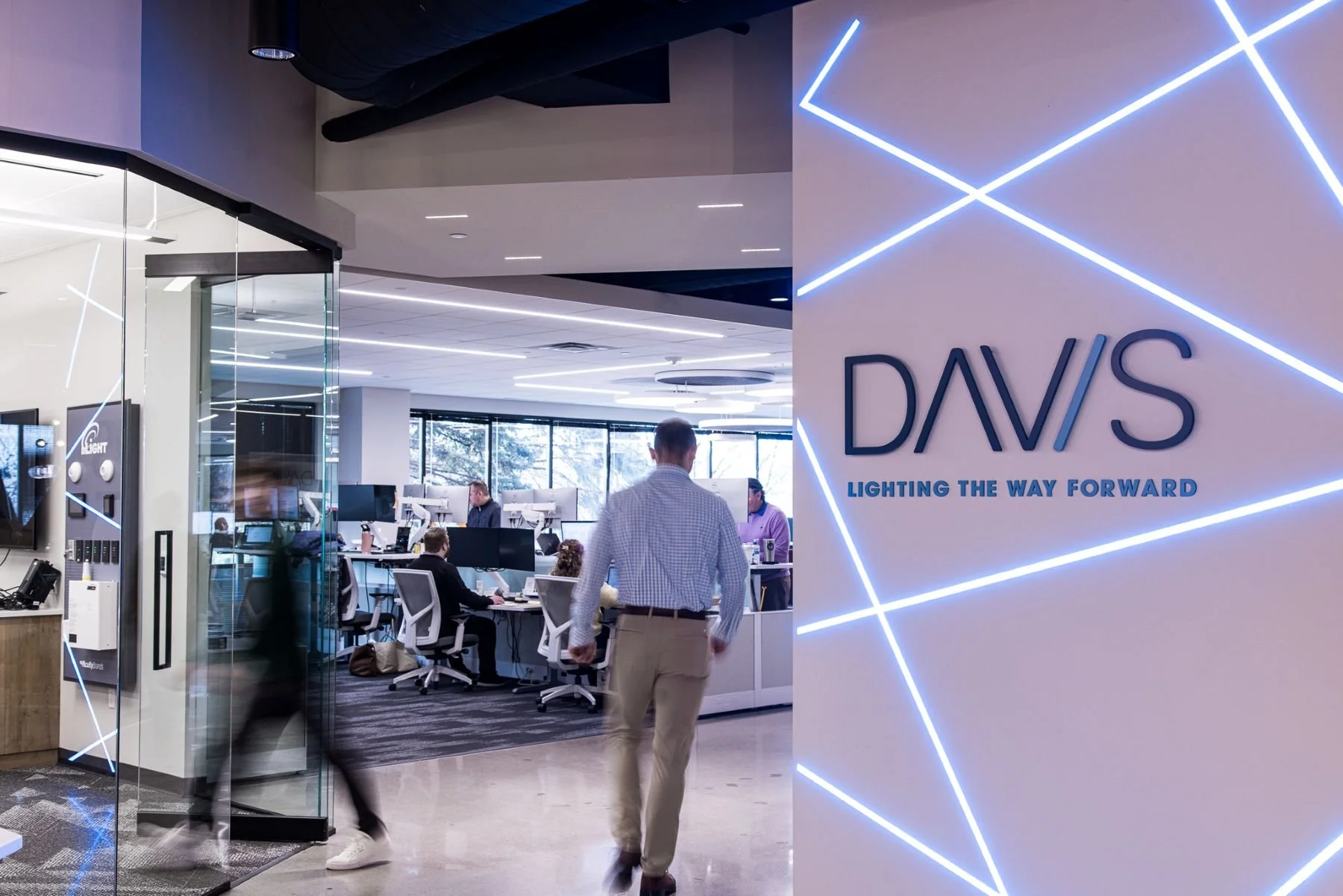
DAVIS changes the way lighting is specified on commercial projects. By tapping into the FFE timeline and budget, they secure installations that cover unlit acoustic fixtures and lighting in holistic embedded arrays instead of topical solutions and value engineering.
Open interiors with sleek finishes look great, but they come with hidden challenges. In the past, wall-to-wall carpet and drop ceilings quietly did the work of absorbing excess noise, making high-capacity spaces more comfortable. Without these elements, modern designers are often left solving for acoustics at the end of a project, leading to tacked-on solutions and diluted impact.
Lighting agencies like DAVIS (Eagan, MN) are breaking this cycle by integrating interior teams to work with specifiers during the Furniture, Fixtures, and Equipment (FFE) phase, about 12-14 months earlier than the Lighting phase would typically occur. This means that for a café ceiling with both lit and unlit baffles, the cost of the installation could be split between the two phases and their budgets, doubling spending power and opening doors to larger installations.
Early involvement in acoustics is a natural fit for lighting agencies because large ceiling installations have the best acoustic mitigation in large commercial interiors.
Real Acoustics
Our standards for aesthetics continue to rise, and so do expectations for spaces that are measurably quieter and more comfortable. Acoustic ceiling installations give designers freedom to embrace glass walls and hard floors without resorting to value engineering at the end of the project using felt wall art or privacy furniture.
Absorption, the “A” in the ABCs of sound control, is the most effective and realistic strategy to quiet high-capacity spaces. The “B” for Blocking is challenging in contemporary design, as barriers like cubicles and curtain walls come down, and the “C” for Covering relies on drowning out competing noise with white noise or elevator music. Felt is a superstar absorber, and the foundation of every Sabin design. Our fixtures are tested using ASTM C423, the standard for measuring sound absorption in a reverberation room, and only those with a Noise Reduction Coefficient (NRC) higher than 0.85 meet our benchmark.
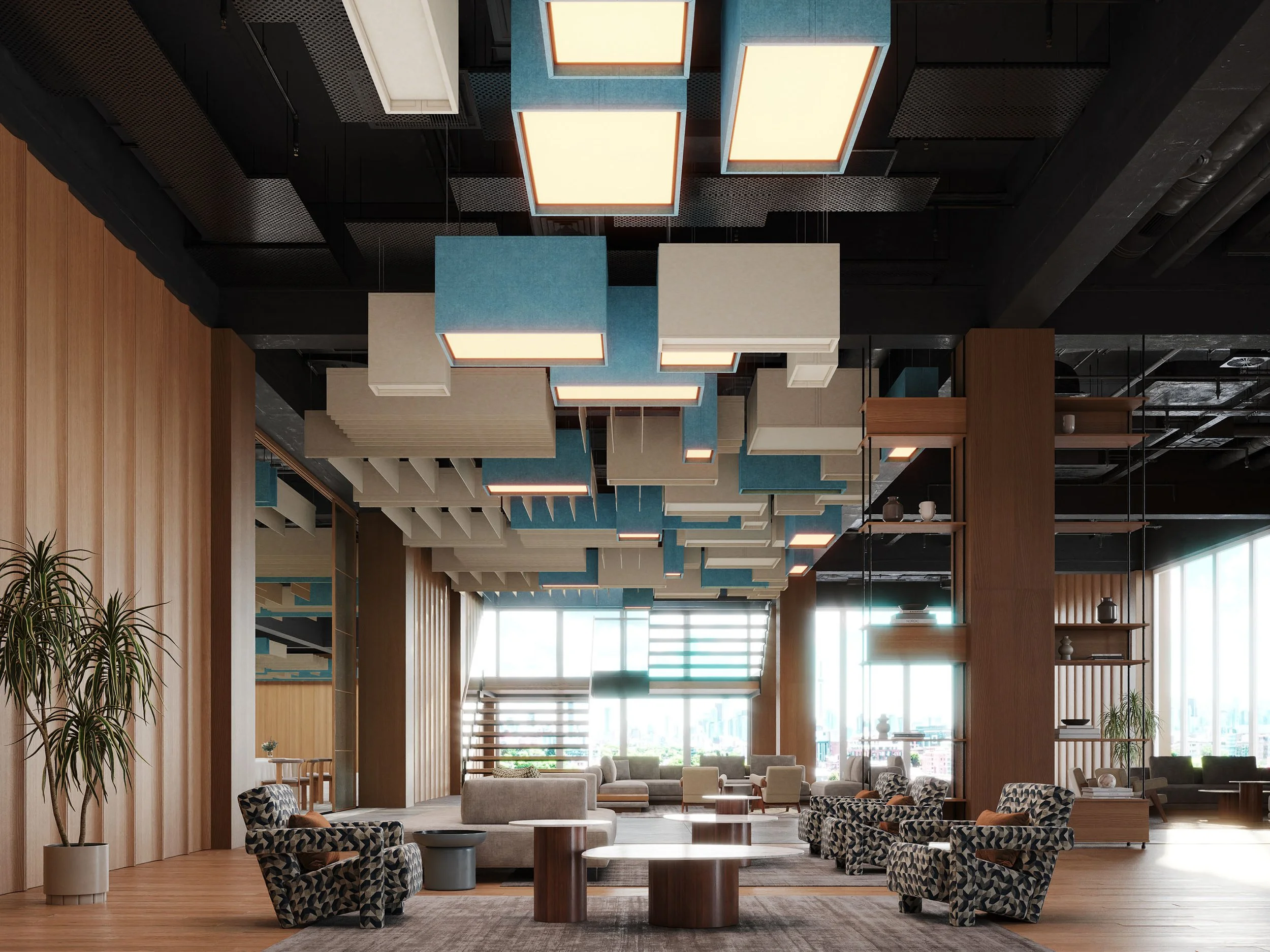
Ceiling-wide installations like baffles or Embedded Arrays™ combine large, felted surfaces that absorb sound with geometric pockets that trap it, preventing waves from returning to occupied spaces.
Ceilings contain vast, underutilized square footage that often require coverage to conceal utilities, especially with the increase in adaptive reuse and refitting of industrialized spaces. Large ceiling installations often satisfy 3-in-1 commercial interior design requirements: acoustics, lighting, and exposed ceiling coverage. With DAVIS’ early integration, specifiers can float between Division 9 FFE and Division 26 Lighting budgets, allowing for more impactful installations.
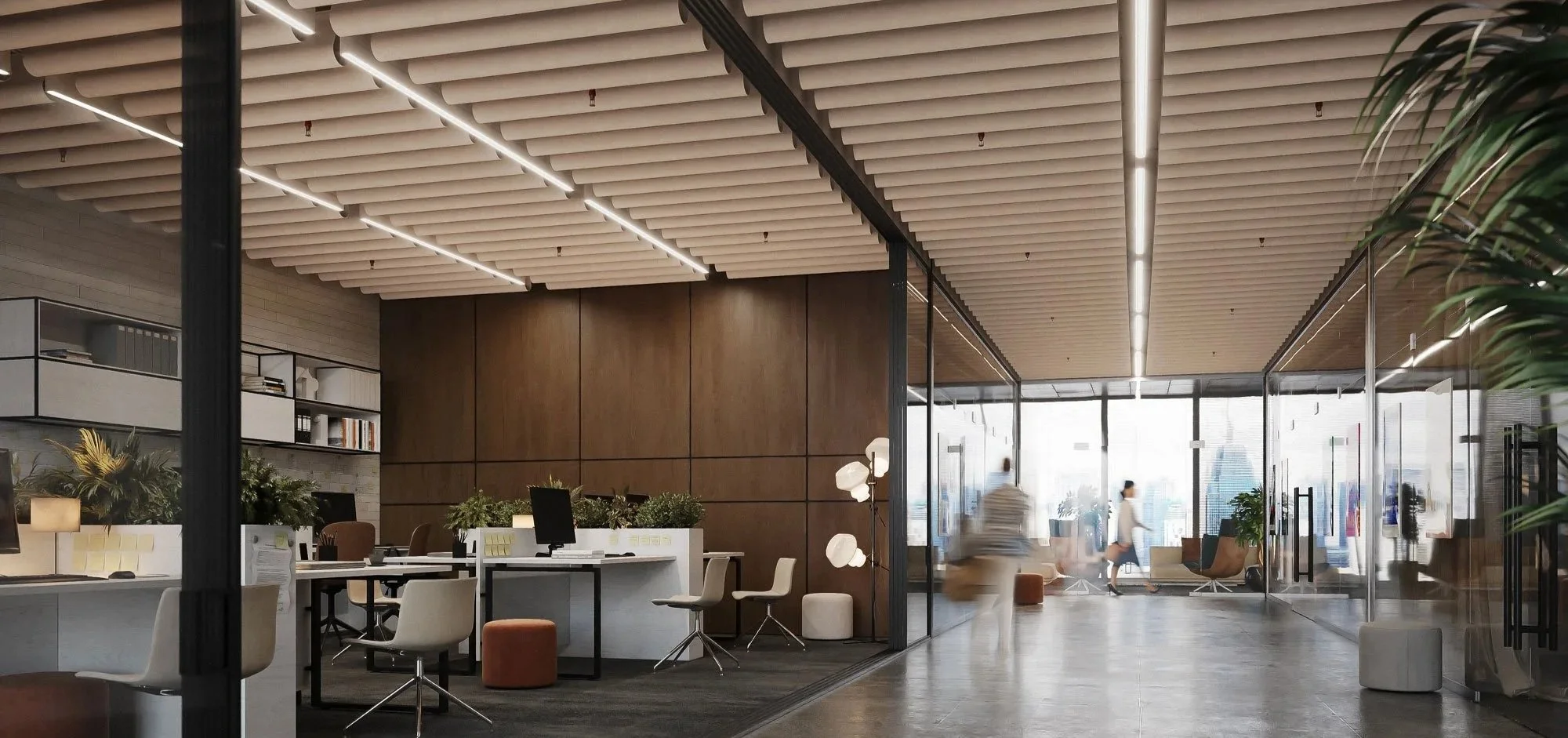
Above: AERO unlit + STADIA lighting
Below: STANDARD baffles in a custom pattern
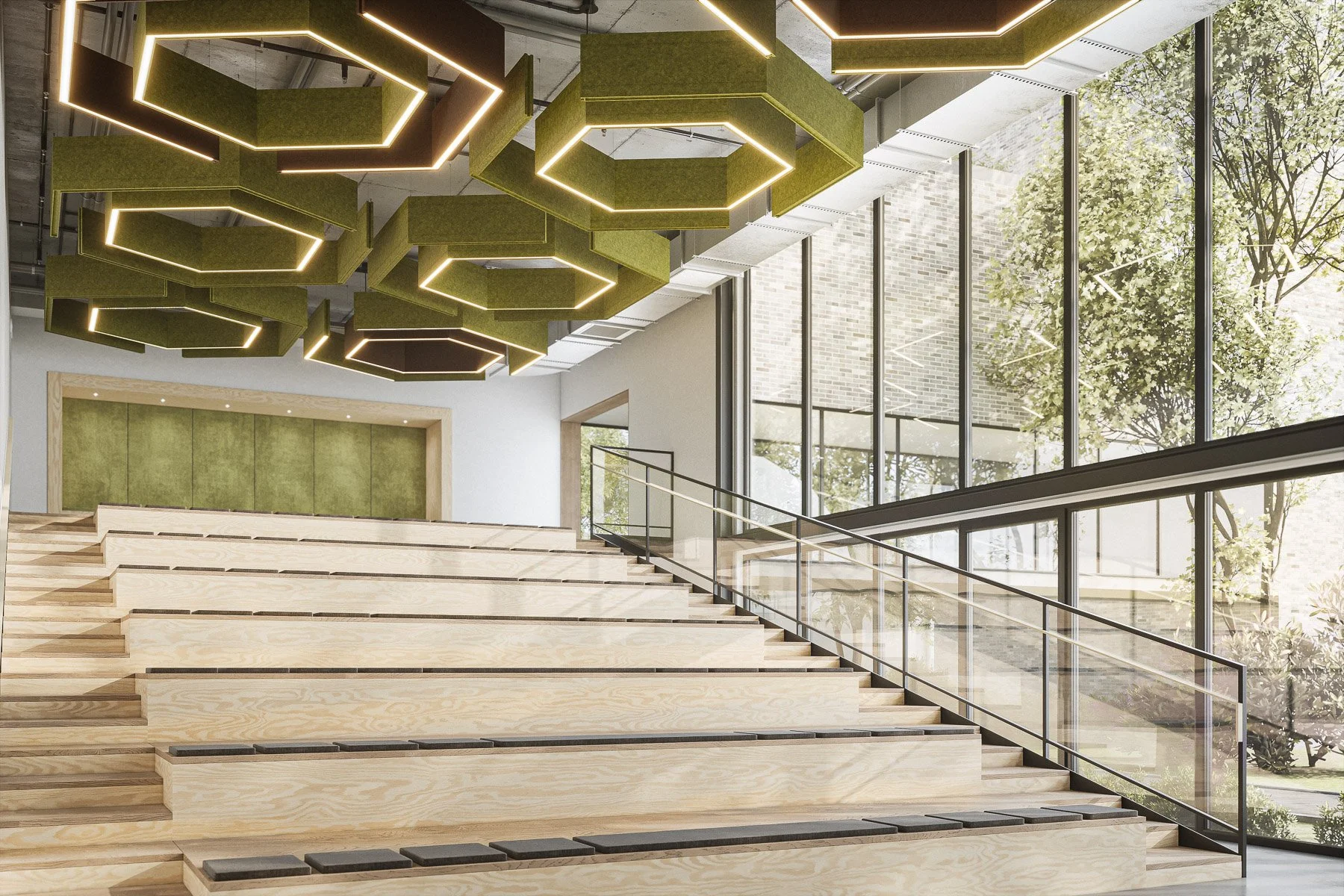

Primary Lighting
Acoustics are just as important as lighting to the comfort of a space, but lighting is much more regulated. There are minimum required IES standards and building code compliances that manufacturers must meet, and agencies do the heavy lifting in deciding which manufacturers will be appropriate for a project.
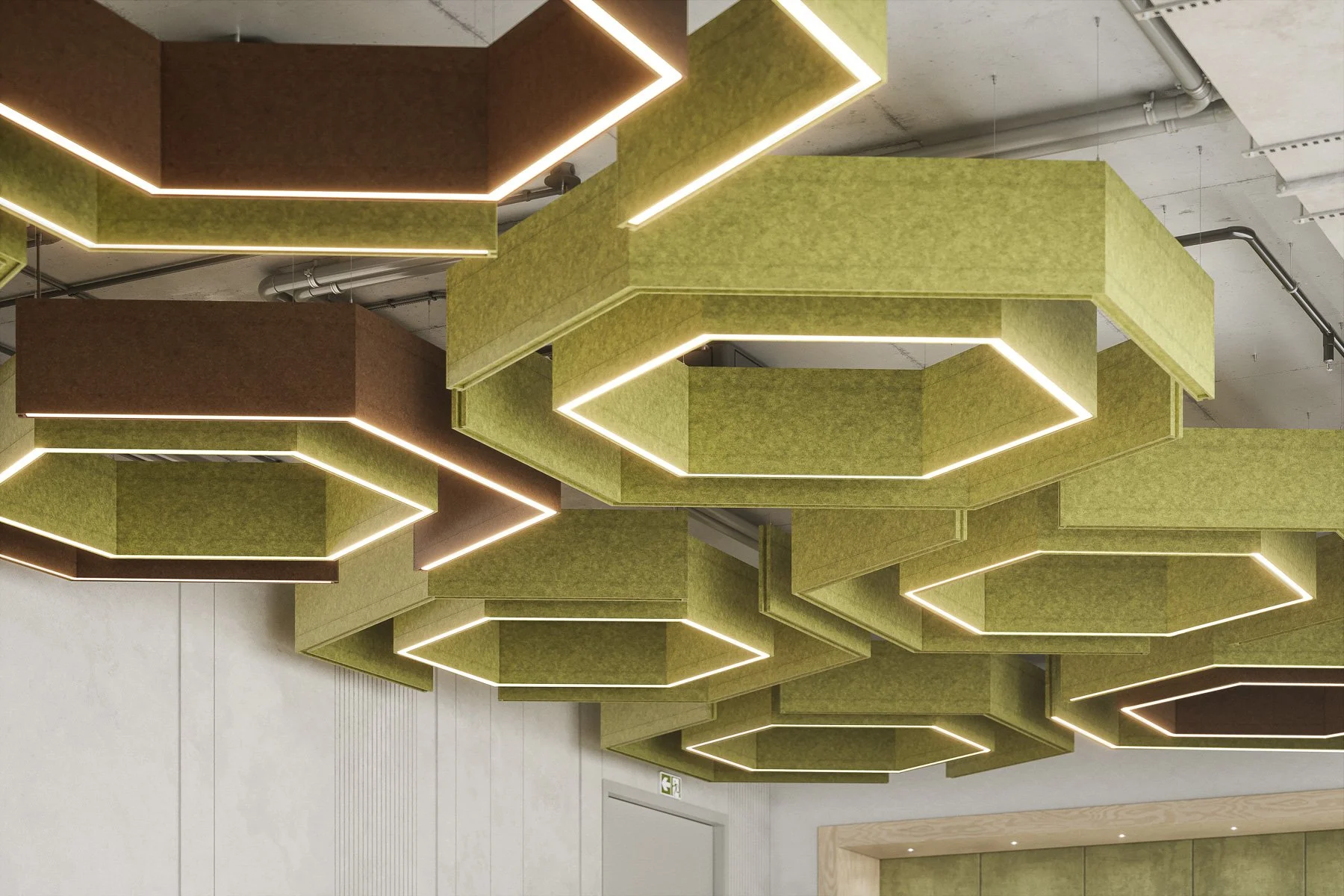
Sabin fixtures have the distinction of providing primary lighting performance, meaning supplementary lighting is not required to meet foot-candle illumination requirements. Our linear LED lights for baffles deliver 1,500 lumens per square foot and diffuse lights reach up to 18,000 lumens per fixture. All lighting comes with Correlated Color Temperature (CCT) options and a Color Rendering Index (CRI) of 90+. With this high output, fewer lit fixtures are needed, opening the room in the budget and on the ceiling for unlit acoustic companion fixtures.
The bridge between high performance lighting and attractive, immersive acoustic fixtures is where Sabin shines. There aren’t as many regulations for acoustic fixtures, but we’re equally as committed to rigorous standards in acoustics. Our Declare label, NRC ratings, and Greenguard Gold certification are just a start. Graceful integrations of lit and unlit fixtures working together in a cohesive design, making room for each other in the budget, easily hit targeted NRC and foot-candles with one installation.

Design Freedom Through Early Integration
Lastly, DAVIS’ model for interior integration allows for crossover with early design development phases, especially with wayfinding and brand design teams. With exposed ceilings and adaptive reuse trends rising, visual hierarchy and material palette of a design now extends upward, bringing the ceiling plane in. For example, lit baffles running along circulation paths in open layouts act as wayfinding elements and pendants with task lighting mark boundaries for heads-down work.
Ceilings are no longer neutral backdrops. Designers are using school or brand palettes or bold saturation to make a statement. By including options for ceiling installations early, especially those that fulfill functional purposes, designers are given more tools to create immersive environments that feel intentional.
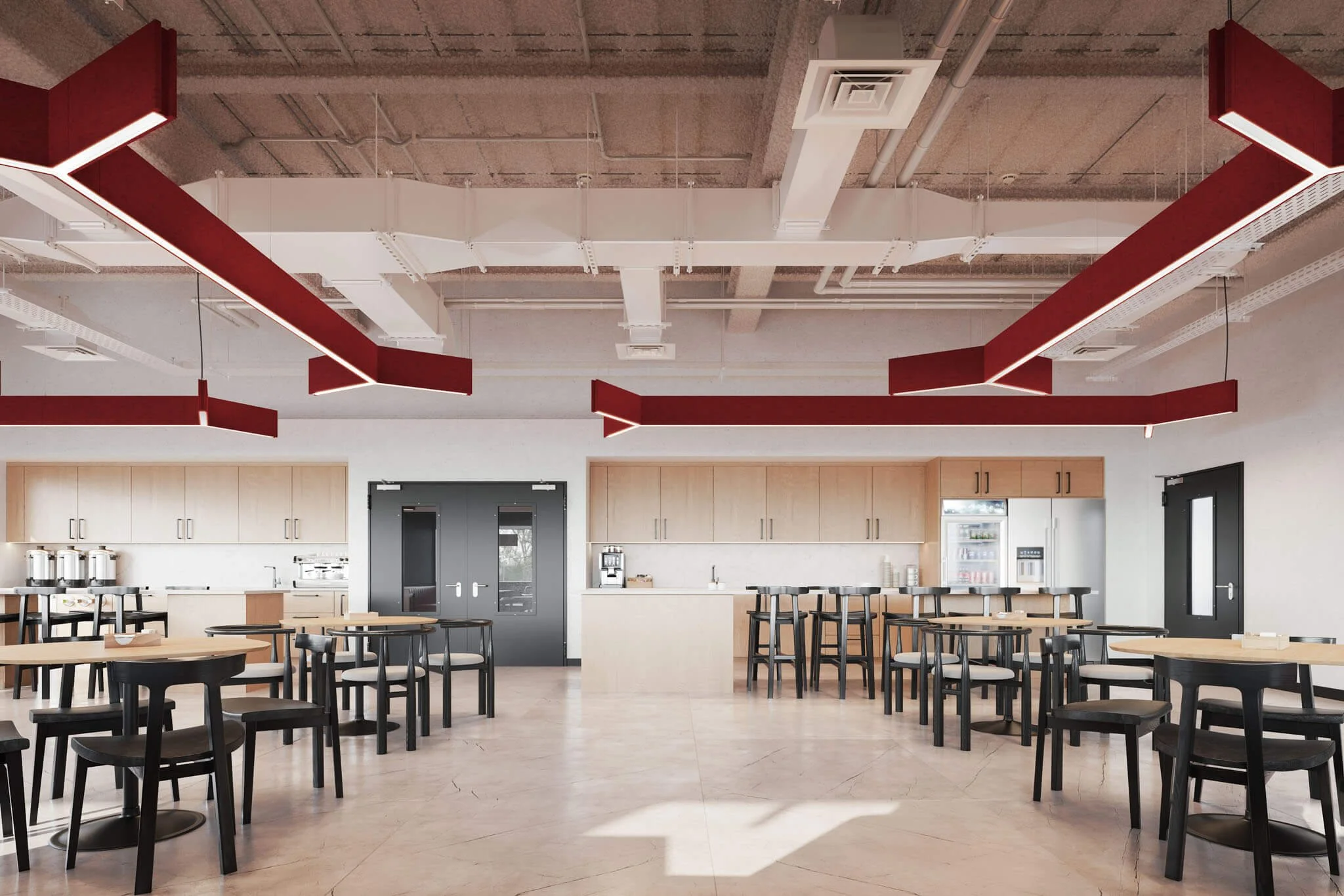

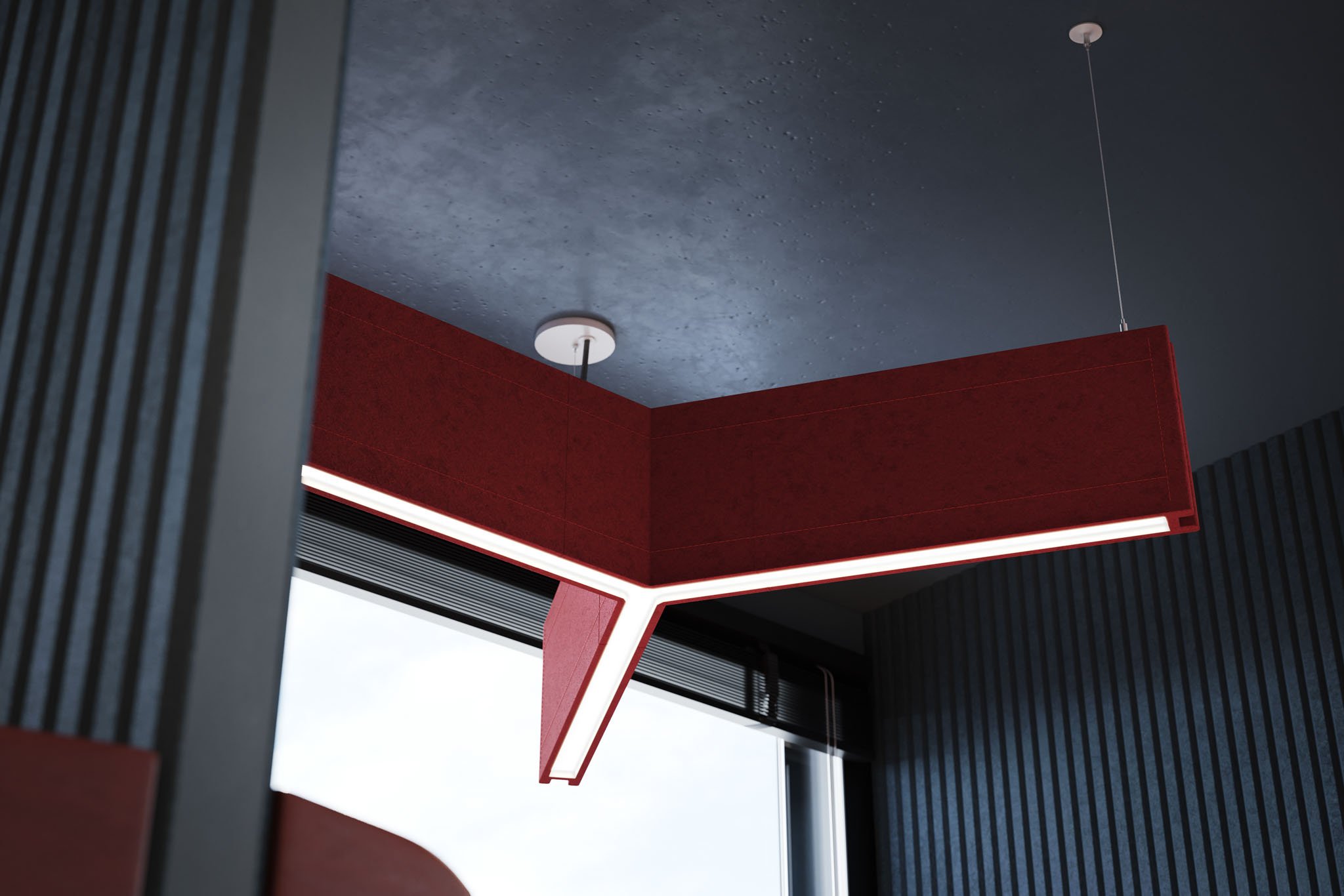
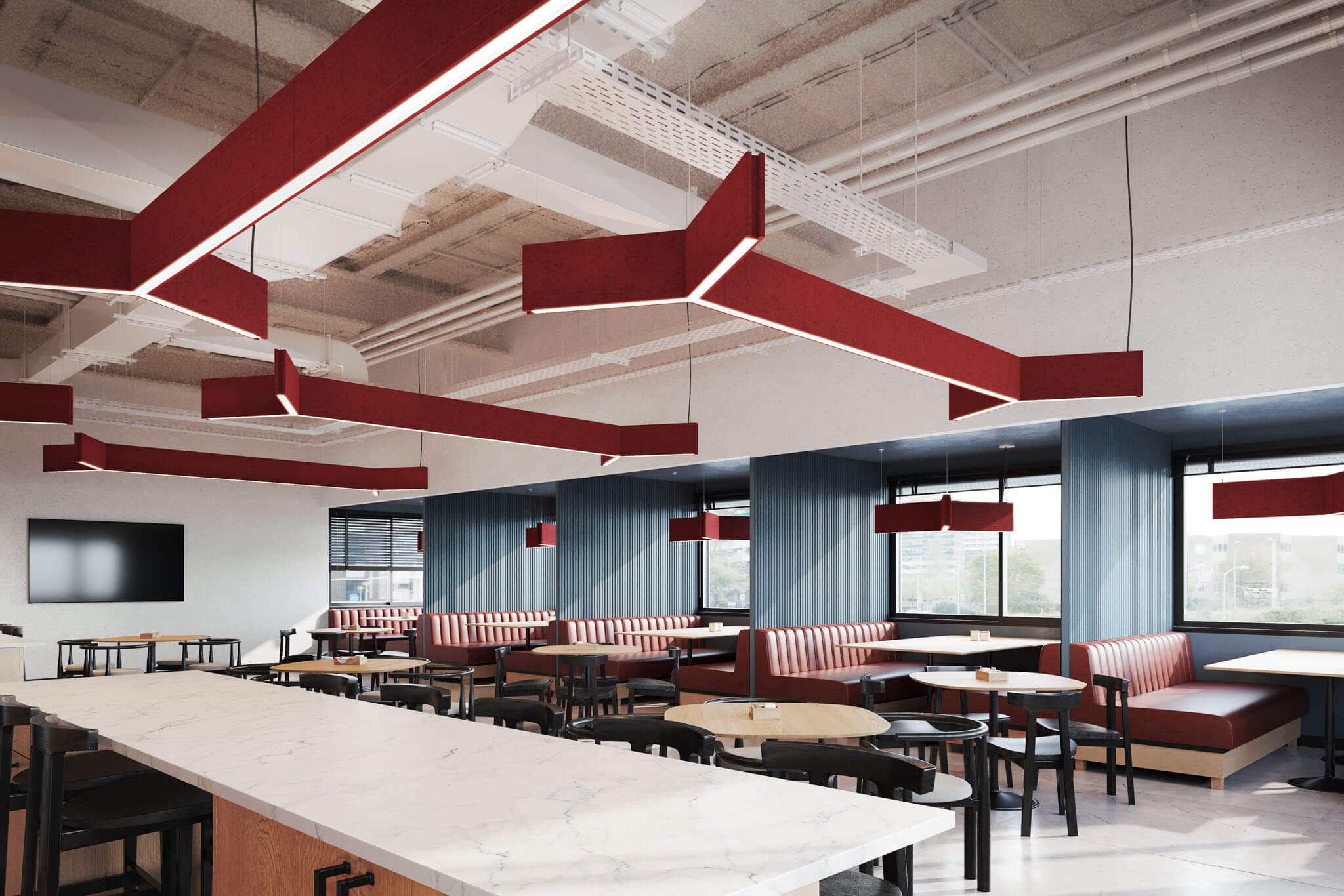
STANDARD baffles in a fishbone pattern, lining the tables in a mutli-use cafe space
Multi-Scoped Benefit
For designers, early integration means more time to work, better finish choices, and a bigger impact. For agencies like DAVIS., it means nimble, full coverage designs with breathing room in the budget to make it work, pursuing more immersive end-products. For the built environment end users, it means clarity for creativity, leaving space to inspire.
Timing is the critical factor. By becoming visible in the interiors process during the FFE stage, long before the lighting package is finalized, DAVIS ensures that acoustics are not an afterthought but a central part of the design. This visibility opens the door to creative solutions that can move between budgets and preserve the architect’s vision. It also builds trust with specifiers, who gain confidence knowing they have a partner that understands both lighting and acoustics and can help them navigate the gray areas between disciplines.

Ultimately, DAVIS provides more than products. They provide a pathway to better outcomes by joining the conversation when it matters most. Early integration means stronger collaboration, clearer choices, and the ability to deliver immersive interiors that are both functional and memorable.
Credit: Shawn Meyer, President, DAVIS
Published September 15, 2025 © Sabin LLC